Real Questions. Straight Answers from the Field.
Ask the Dirt Guy is Maelee Construction’s Q&A series, where we answer common questions about site work, excavation, grading, drainage, demolition, and land preparation. Whether you’re a homeowner, builder, or property owner, this series is designed to give you straightforward answers based on real-world experience, helping you make informed decisions before your next project.
What’s the Difference Between Grading and Leveling?
If you’ve ever talked with a contractor about preparing your property, you may have heard the words grading and leveling used interchangeably. They sound like they mean the same thing. But they don’t. While both involve shaping the ground, grading and leveling serve different purposes. Understanding the difference can help property owners better understand what their site actually needs before dirt starts moving. The short version? Leveling focuses on creating a more even surface. Grading focuses on creating the right slopes and elevations for the property. And when it comes to drainage and construction, that difference matters.
What Is Leveling?
Leveling generally refers to adjusting the ground to create a more even or consistent surface. Depending on the project, this may involve removing high areas, filling low areas, or redistributing material across the site. Leveling can be useful for certain applications, including:
- Preparing areas for landscaping
- Improving uneven portions of a yard
- Creating usable areas of property
- Preparing certain surfaces for future improvements
But making an area flat does not automatically mean the property is properly prepared. That’s where grading comes in.
What Is Grading?
Grading involves shaping the ground to achieve specific elevations and slopes.
Instead of simply asking:
“Is the ground flat?”
Grading asks:
“Where does the ground need to be, and where should the water go?”
Proper grading can help direct water away from structures and toward appropriate drainage areas.
It also helps create the elevations needed for:
- Buildings
- Driveways
- Walkways
- Yards
- Drainage areas
- Other site improvements
The goal is to create a property that works properly, not simply one that looks flat.
Why Does the Difference Matter?
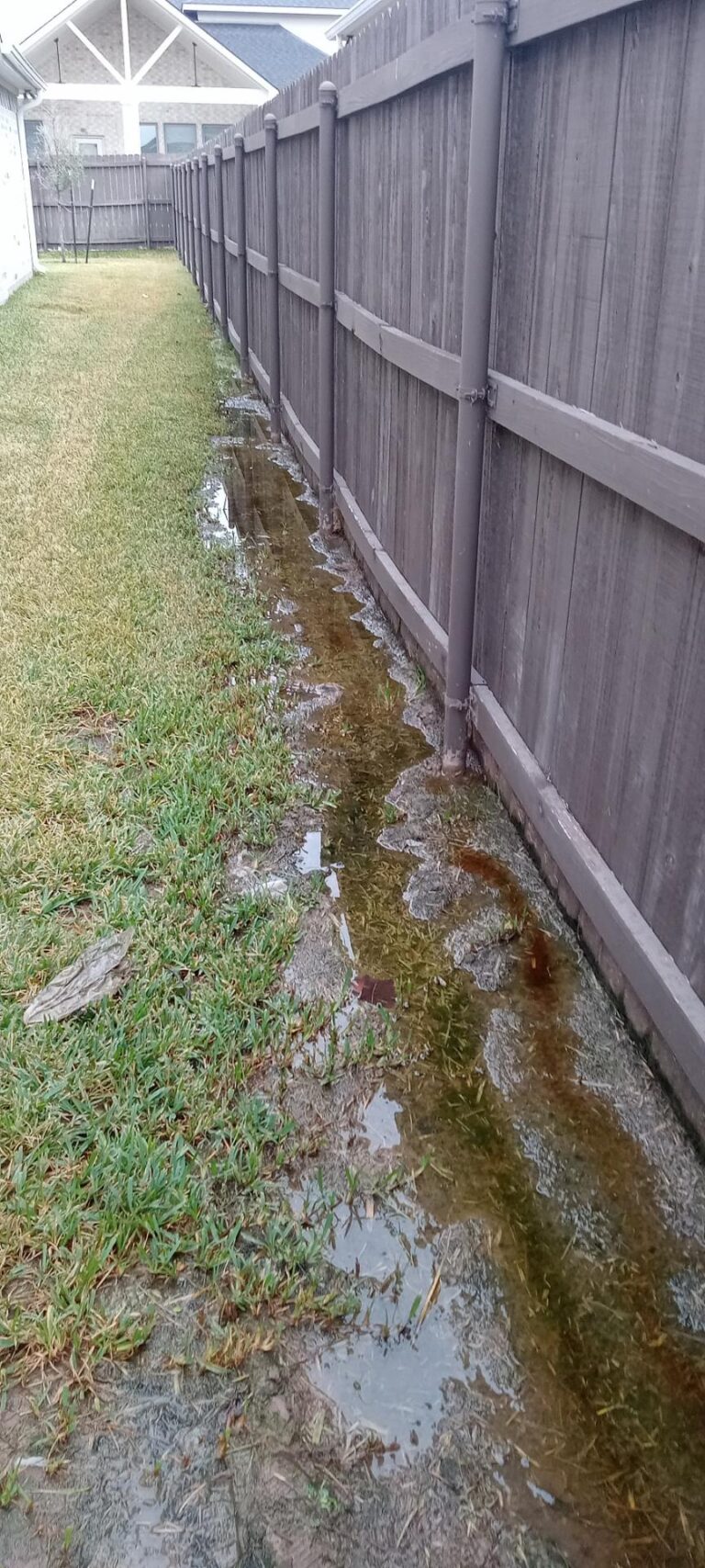
Imagine you have a low area in your yard that holds water after every rainfall. You could add dirt to make the area higher. That may help. But if the surrounding property is not shaped correctly, the water may simply move somewhere else. That’s because changing one elevation can affect the way water moves across the entire site. Grading considers the relationship between different areas of the property.
It looks at:
- Existing elevations
- Low and high areas
- Drainage patterns
- Structures
- Property boundaries
- Driveways and access
- Future construction
- Where water needs to go
That’s why simply making the ground flat isn’t always the right solution.
Does Every Property Need to Be Graded?
Not every property needs the same amount of grading. Some sites may already have suitable elevations and drainage patterns. Others may require significant work before construction or other improvements can move forward. The right approach depends on the existing conditions and what you’re planning to do with the property. A residential yard may require a different solution than a future homesite, commercial property, or driveway. Before changing elevations, it’s important to understand what the property actually needs.
What Happens If Grading Is Done Incorrectly?
Improper grading can create problems that may not be obvious until rainfall exposes them.
Depending on the property, poor grading may contribute to:
- Standing water
- Erosion
- Water collecting near structures
- Muddy areas
- Drainage problems
- Difficult access
- Problems around driveways and walkways
- Additional corrective work
One of the biggest concerns is that fixing a grading problem later can become more complicated once other work has already been completed. Landscaping may be installed. Concrete may be poured. Structures may be finished. That’s why understanding the property’s elevations early can save time and prevent unnecessary rework.
Can I Grade My Yard Myself?
Small landscaping projects may involve minor changes to the ground. But larger grading projects are more complicated than simply moving dirt from a high spot to a low spot.
Before making significant changes, you need to understand:
- Existing elevations
- Drainage patterns
- Soil conditions
- Required finished elevations
- Property boundaries
- Nearby structures
- Where water will flow after the changes
Adding dirt to one area without considering the rest of the property can sometimes create a new drainage problem instead of solving the original one. When the changes are significant, professional evaluation can help determine the right approach before major work begins.
A Common Mistake: “Just Make It Flat”
This is one of the biggest misconceptions we see. A property does not always need to be flat. In fact, controlled slopes are often necessary to help water move across the site. A properly graded property may look relatively level while still having carefully planned changes in elevation. Those slopes are intentional. They’re part of what helps the property drain properly and connect different areas together.
When Should Grading Be Considered?
Grading should be considered early whenever you’re:
- Building a new home
- Preparing a homesite
- Installing a driveway
- Developing land
- Correcting recurring drainage problems
- Creating usable areas of property
- Preparing for future construction
The earlier grading is considered, the more options there may be for addressing elevation and drainage concerns. Trying to correct major grading problems after construction is complete can be much more difficult.
The Bottom Line
Grading and leveling are related, but they aren’t the same thing.
Leveling focuses on creating a more even surface.
Grading focuses on creating the right elevations and slopes so the property functions properly.
When it comes to construction and drainage, the goal isn’t simply to make the ground flat. It’s to make the ground work. Before moving dirt, understand the elevations, drainage, soil conditions, and plans for the property. Because the right grade can make a big difference in where the water goes and how the property performs.
From the Maelee Team
“People sometimes think grading means making everything flat, but that’s not really the goal. We’re looking at the elevations, the slopes, and how everything connects so the property can drain and function the way it needs to.”
Have a Question for the Dirt Guy?
Wondering whether your property needs grading, leveling, drainage improvements, or other site work?
We’re here to help you understand what your property needs before you start moving dirt.
Contact Maelee Construction today to discuss your project.
Built Without Excuses, That’s the Maelee Way!